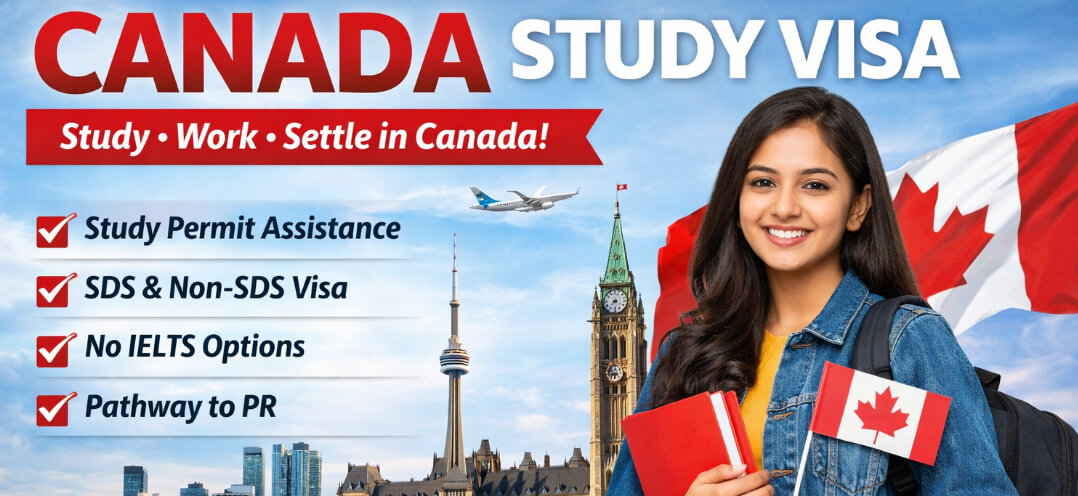
Studying in Canada is a popular choice for international students because of its high-quality education, safe environment, and strong post-study work opportunities. To study in Canada, you need a Study Permit, which is commonly referred to as a Canada Study Visa.
This guide explains everything you need to know about the Canada Study Visa process in 2026, including requirements, costs, and tips for approval.
What is a Canada Study Visa?
A Canada Study Visa (Study Permit) is an official document issued by the Government of Canada that allows international students to study at designated learning institutions (DLIs).
👉 Important: The visa allows entry into Canada, while the study permit allows you to stay and study.
Eligibility Requirements
To apply for a Canada Study Visa, you must meet the following requirements:
1. Acceptance Letter (DLI)
You must have an offer letter from a Designated Learning Institution (DLI) in Canada.
2. Proof of Funds
You must show enough money to cover:
- Tuition fees
- Living expenses
- Return travel
👉 Minimum funds (approx 2026):
- $10,000 – $15,000 per year (outside Quebec)
3. Valid Passport
Your passport must be valid for the entire duration of your stay.
4. English/French Language Test
Most institutions require:
- IELTS
- TOEFL
- PTE
5. Statement of Purpose (SOP)
You must explain:
- Why you chose Canada
- Your study plans
- Future goals
Required Documents
When applying, you typically need:
- Passport copy
- Offer letter from DLI
- Proof of funds (bank statement)
- IELTS/TOEFL result
- SOP (Study plan)
- Passport-size photos
- Medical exam (if required)
- Police clearance (in some cases)
Canada Study Visa Fees (2026)
- Study permit fee: CAD $150
- Biometrics fee: CAD $85
- Medical exam: varies by country
👉 Total estimated cost: CAD $235+
How to Apply (Step-by-Step)
Step 1: Get Admission
Apply to Canadian colleges/universities and receive your offer letter.
Step 2: Prepare Documents
Collect all required documents, including financial proof and SOP.
Step 3: Apply Online
Apply through the official Canada immigration website.
Step 4: Biometrics
Visit a visa application center to submit fingerprints and photo.
Step 5: Wait for Decision
Processing time varies depending on your country.
Processing Time (2026)
- Standard processing: 4–8 weeks
- Some countries: faster or slower depending on volume
👉 Apply early to avoid delays.
Can You Work While Studying?
Yes, international students in Canada can work:
Work Rules:
- Up to 20 hours per week (during study)
- Full-time during holidays
👉 Many students use part-time jobs to support living expenses.
Post-Study Work Permit (PGWP)
After completing your studies, you can apply for a Post-Graduation Work Permit (PGWP).
Benefits:
- Work in Canada up to 3 years
- Gain Canadian work experience
- Pathway to permanent residency (PR)
Cost of Living in Canada
Monthly expenses depend on the city.
Average Monthly Cost:
- Rent: CAD $500 – $1,200
- Food: CAD $200 – $400
- Transport: CAD $80 – $150
👉 Total: CAD $800 – $1,500 per month
Tips for Visa Approval
Show Strong Financial Proof
Clear bank statements improve approval chances.
Write a Strong SOP
Explain your study goals clearly.
Choose the Right Course
Your course should match your academic background.
Apply Early
Avoid last-minute applications.
Common Reasons for Visa Rejection
- Insufficient funds
- Weak SOP
- Unclear study plan
- Lack of ties to home country
👉 Always double-check your documents.
Advantages of Studying in Canada
- Globally recognized degrees
- Work while studying
- PR opportunities
- Safe and multicultural society
Final Thoughts
Canada remains one of the best countries for international students in 2026. With affordable education, work opportunities, and a clear pathway to permanent residency, it offers excellent long-term benefits.
If you prepare your documents carefully and apply correctly, getting a Canada Study Visa is very achievable.
Published in Study



Be First to Comment